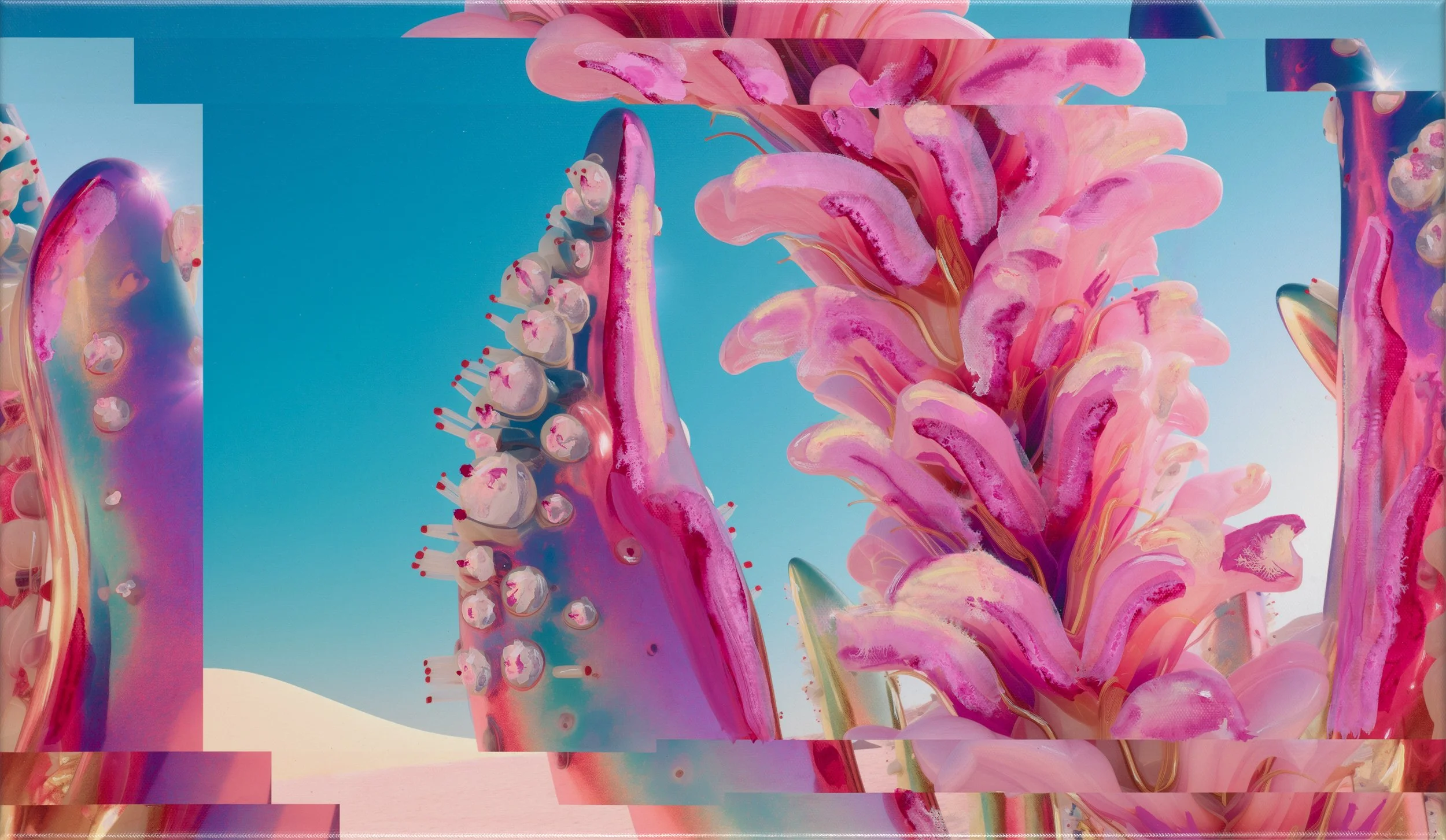
Paintings: Future Flora
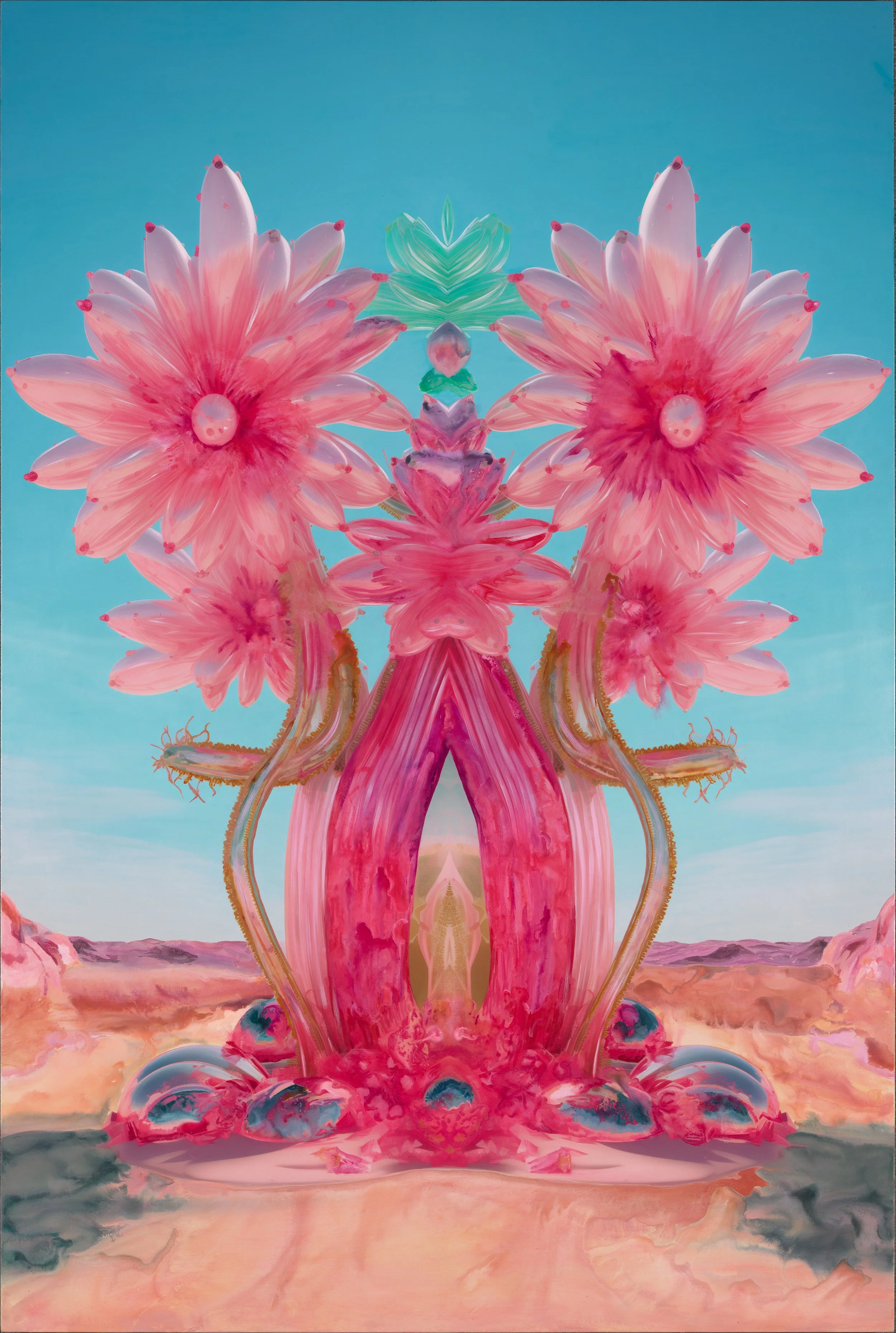
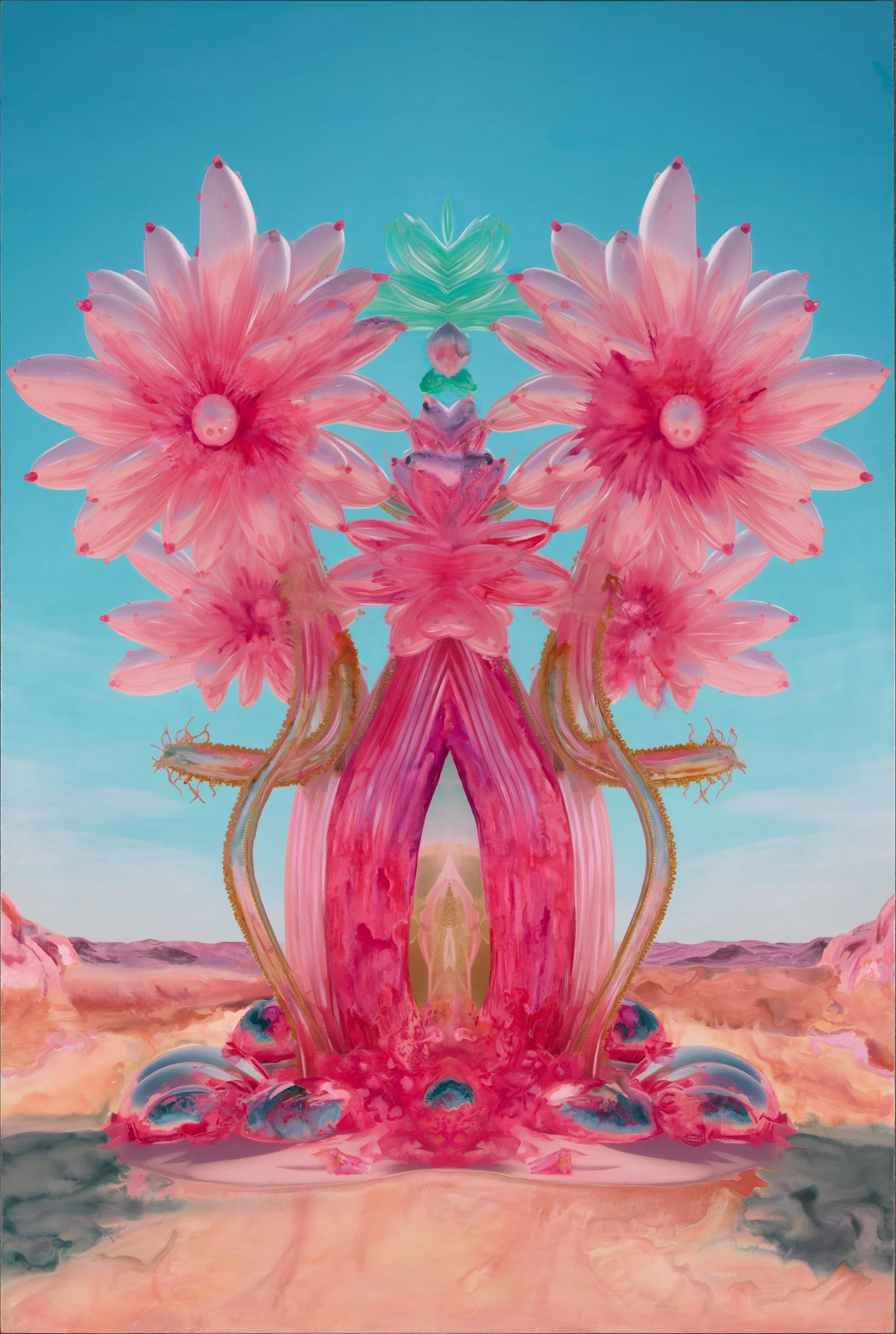
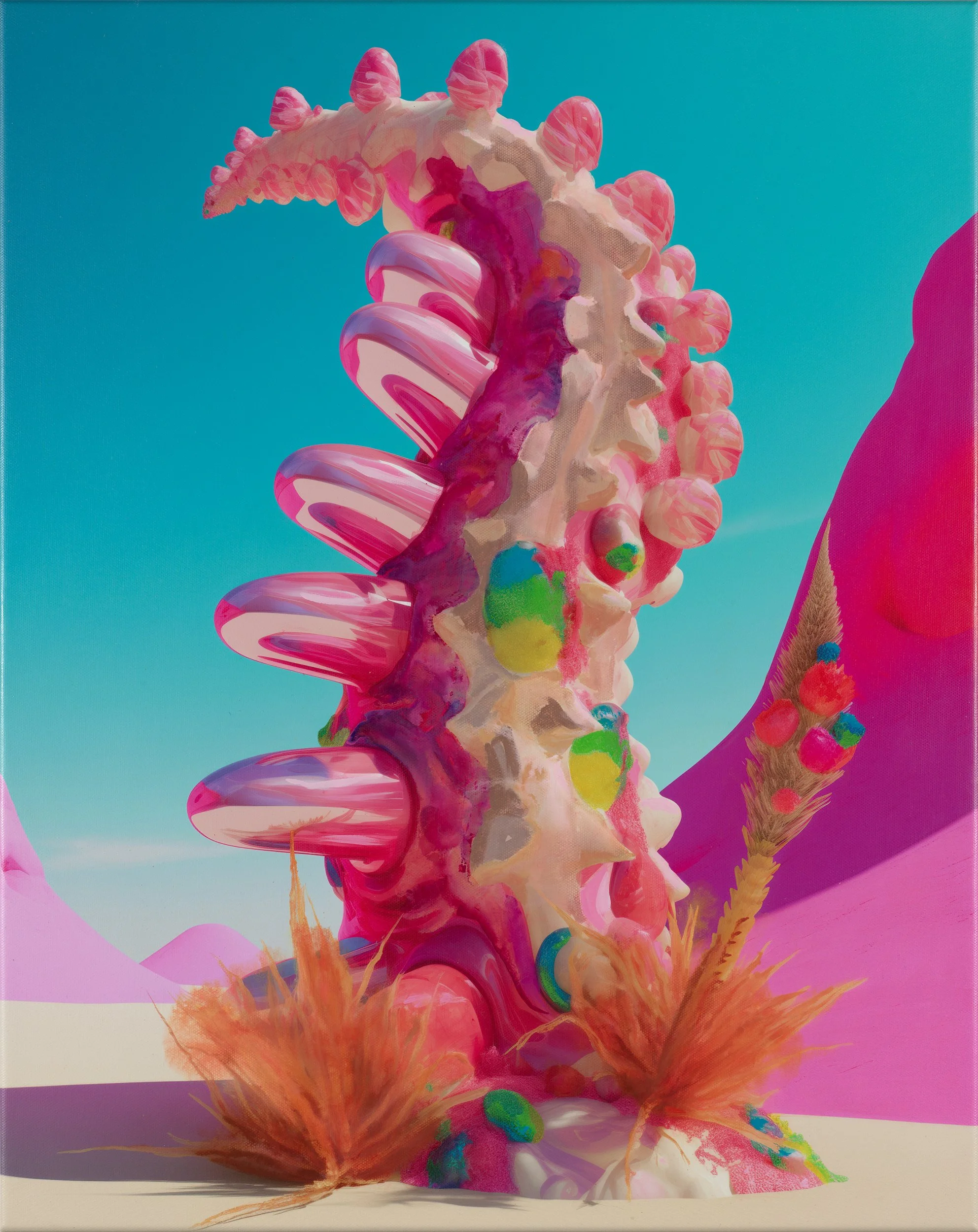
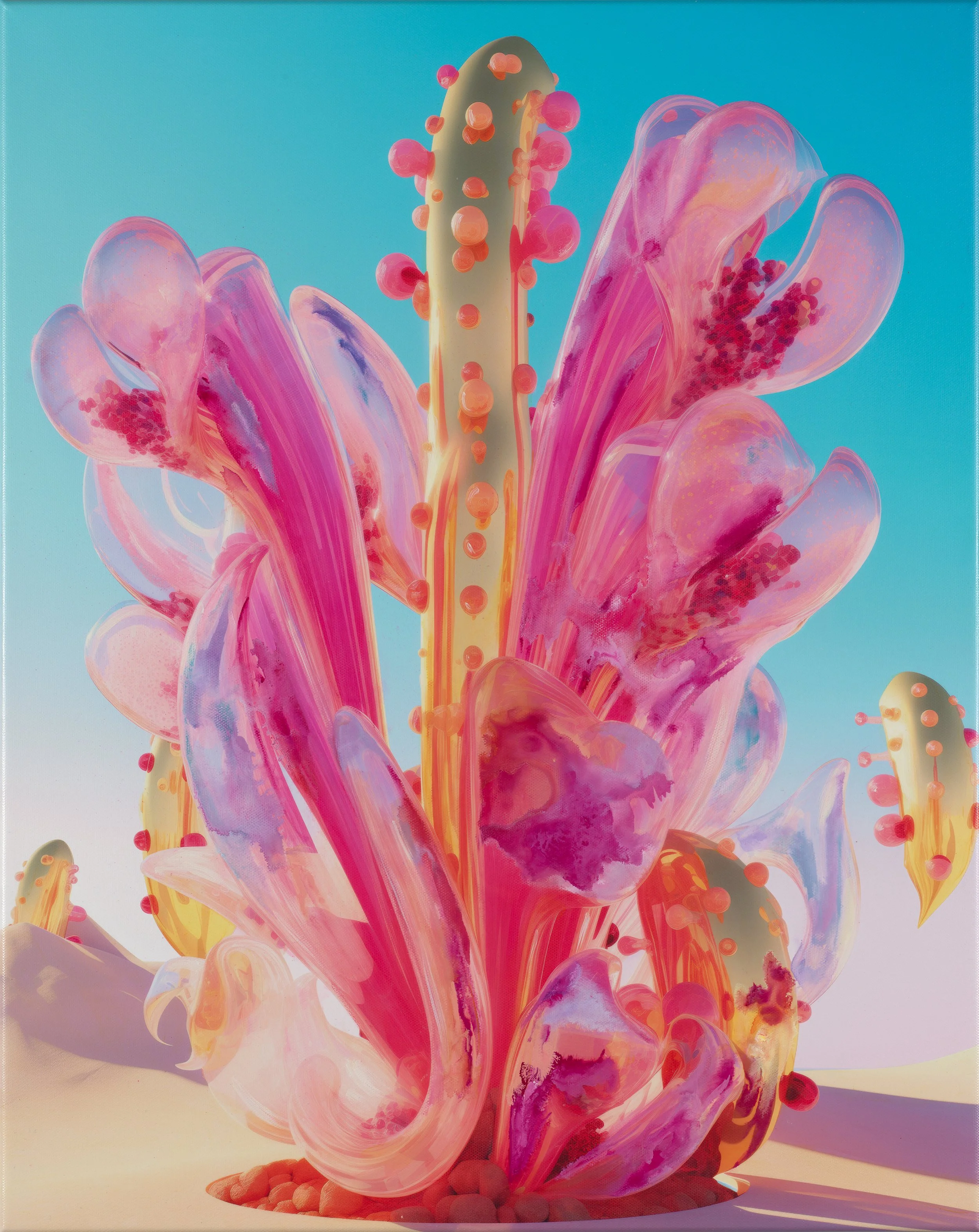
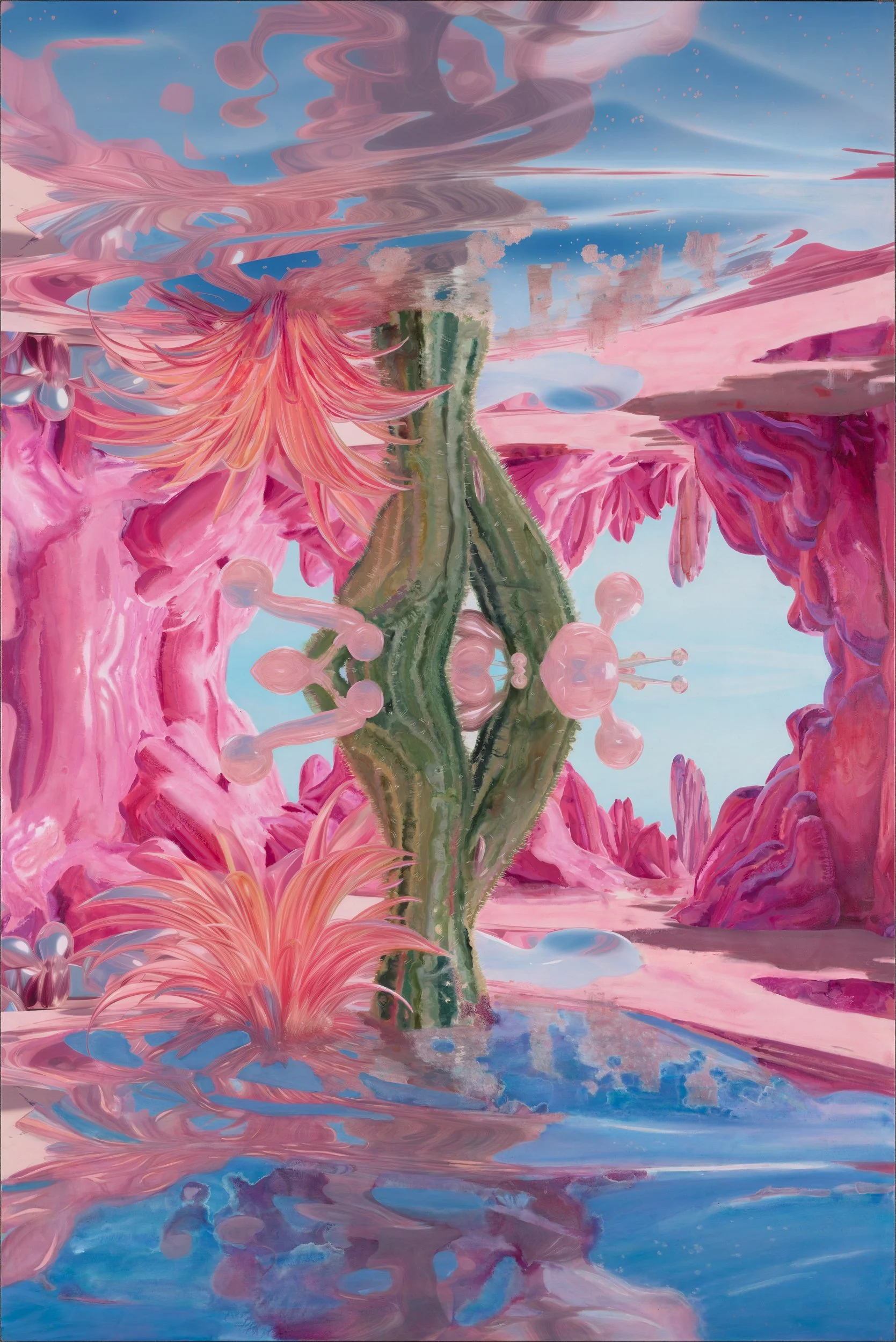
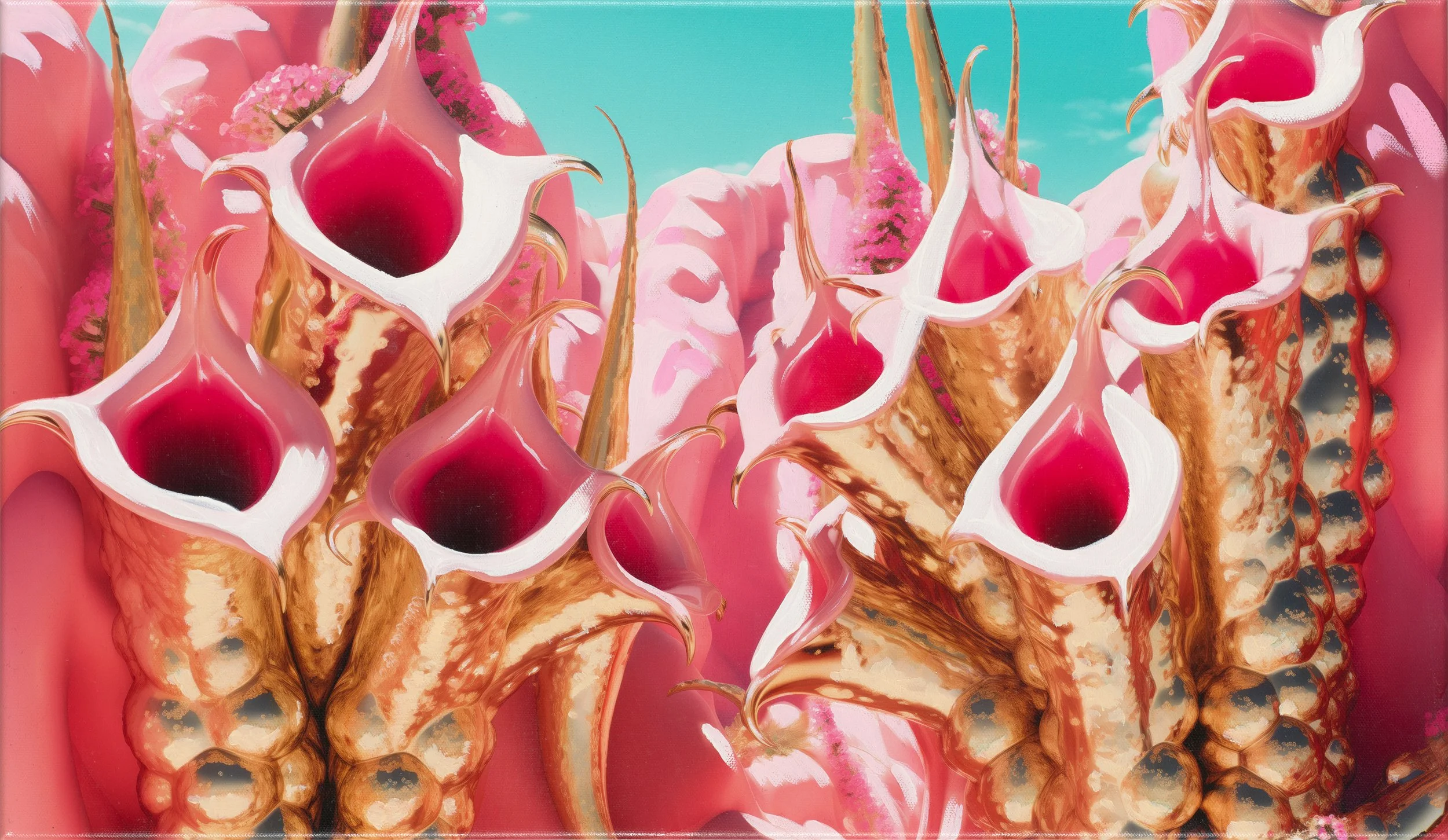
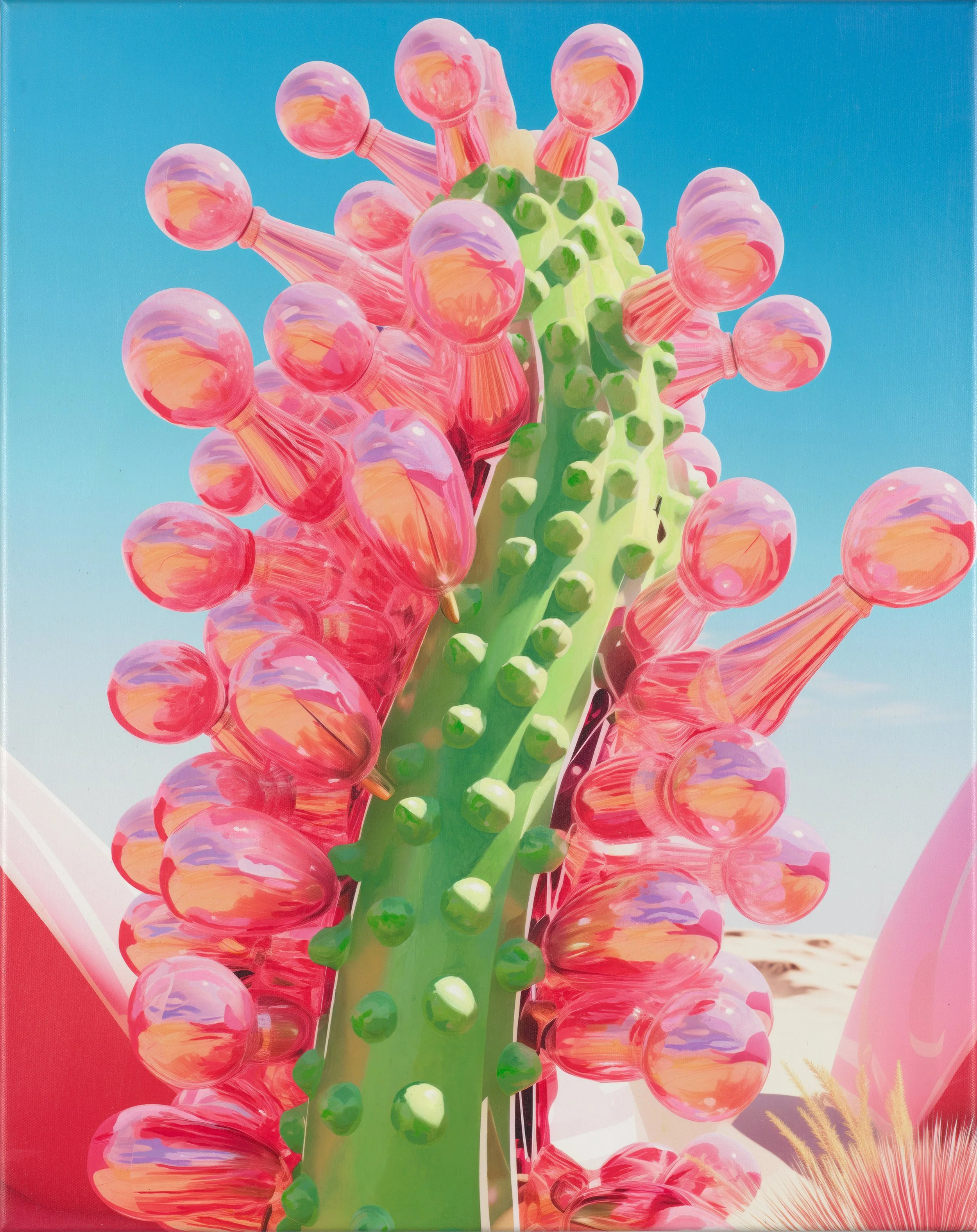
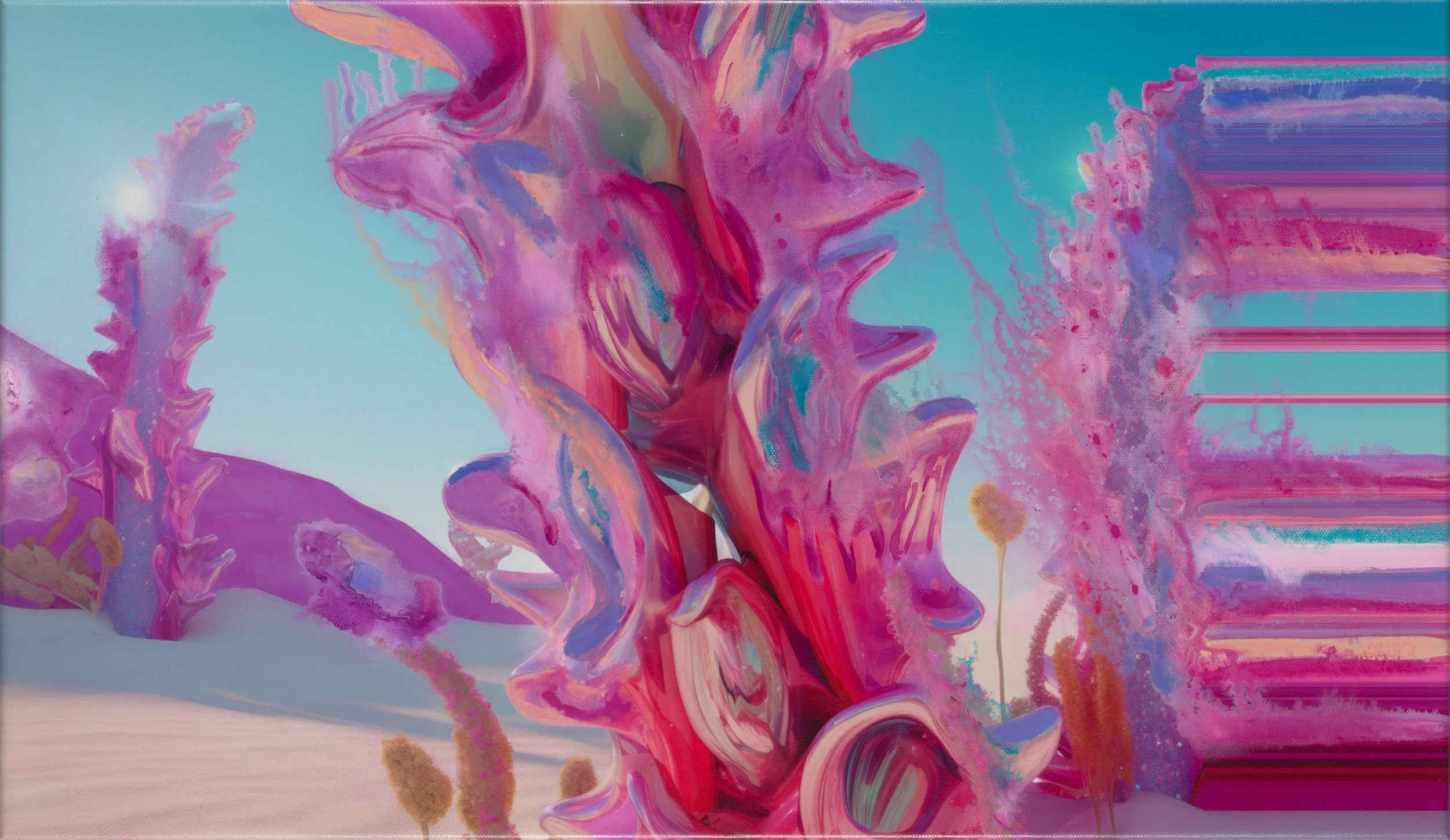
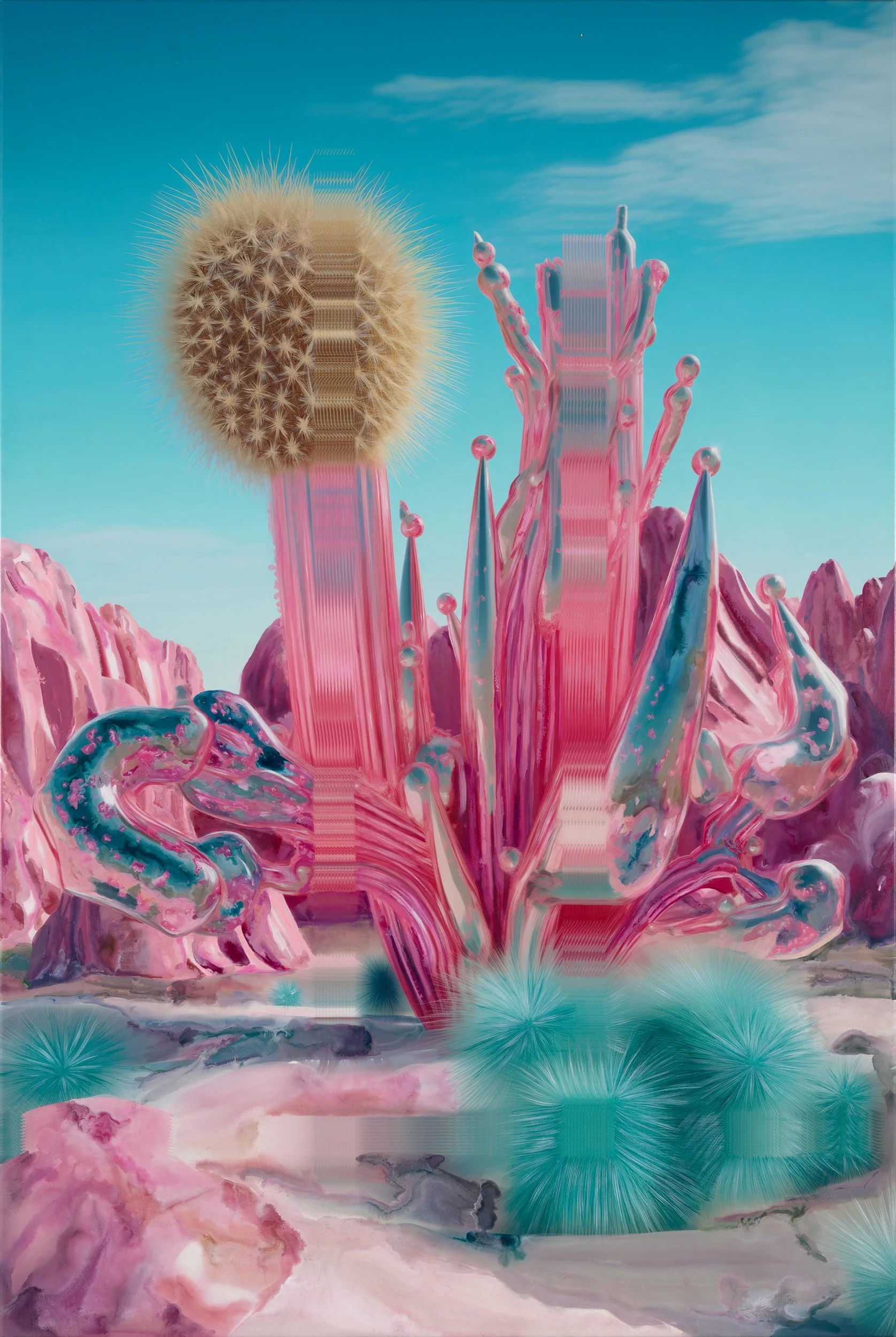
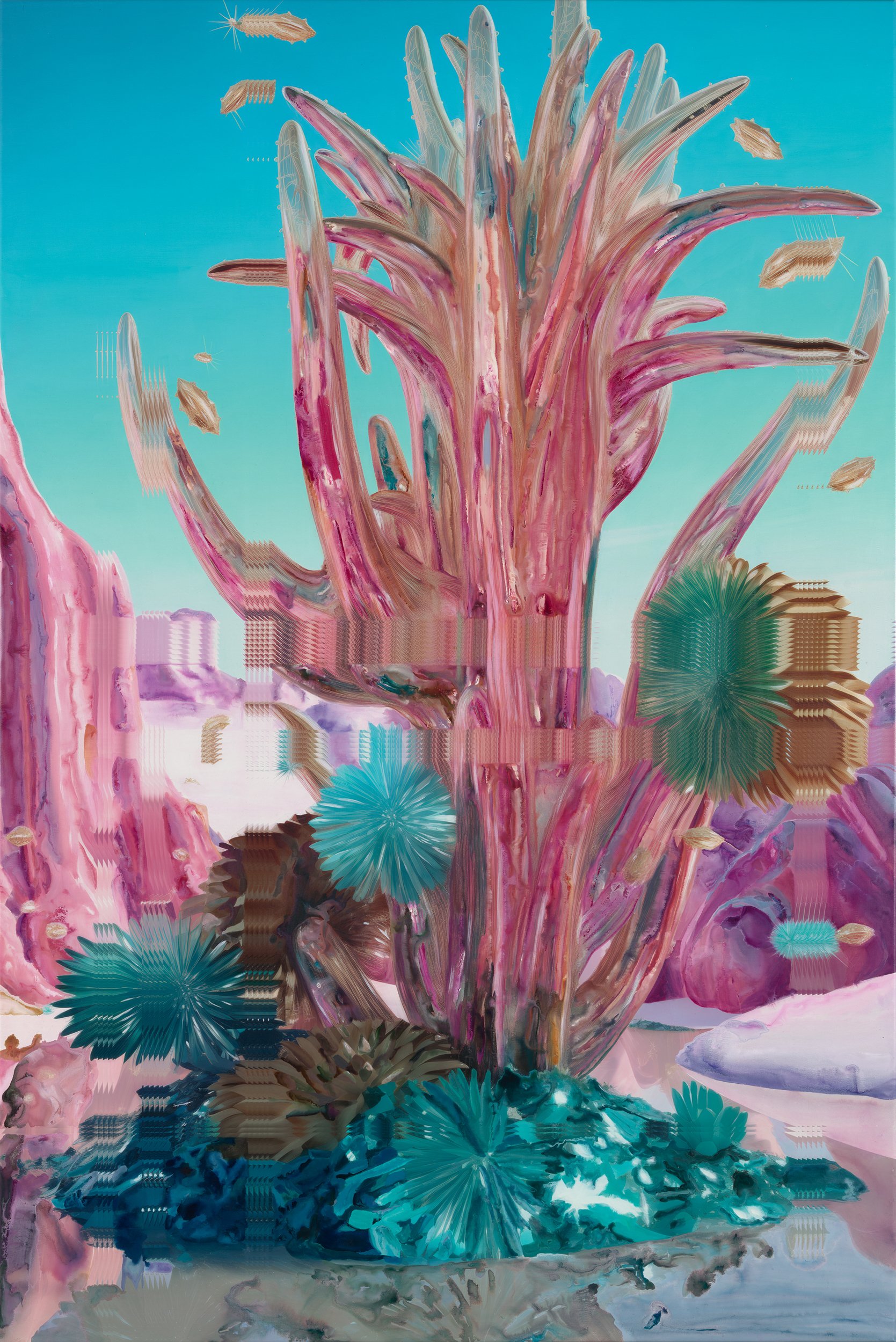
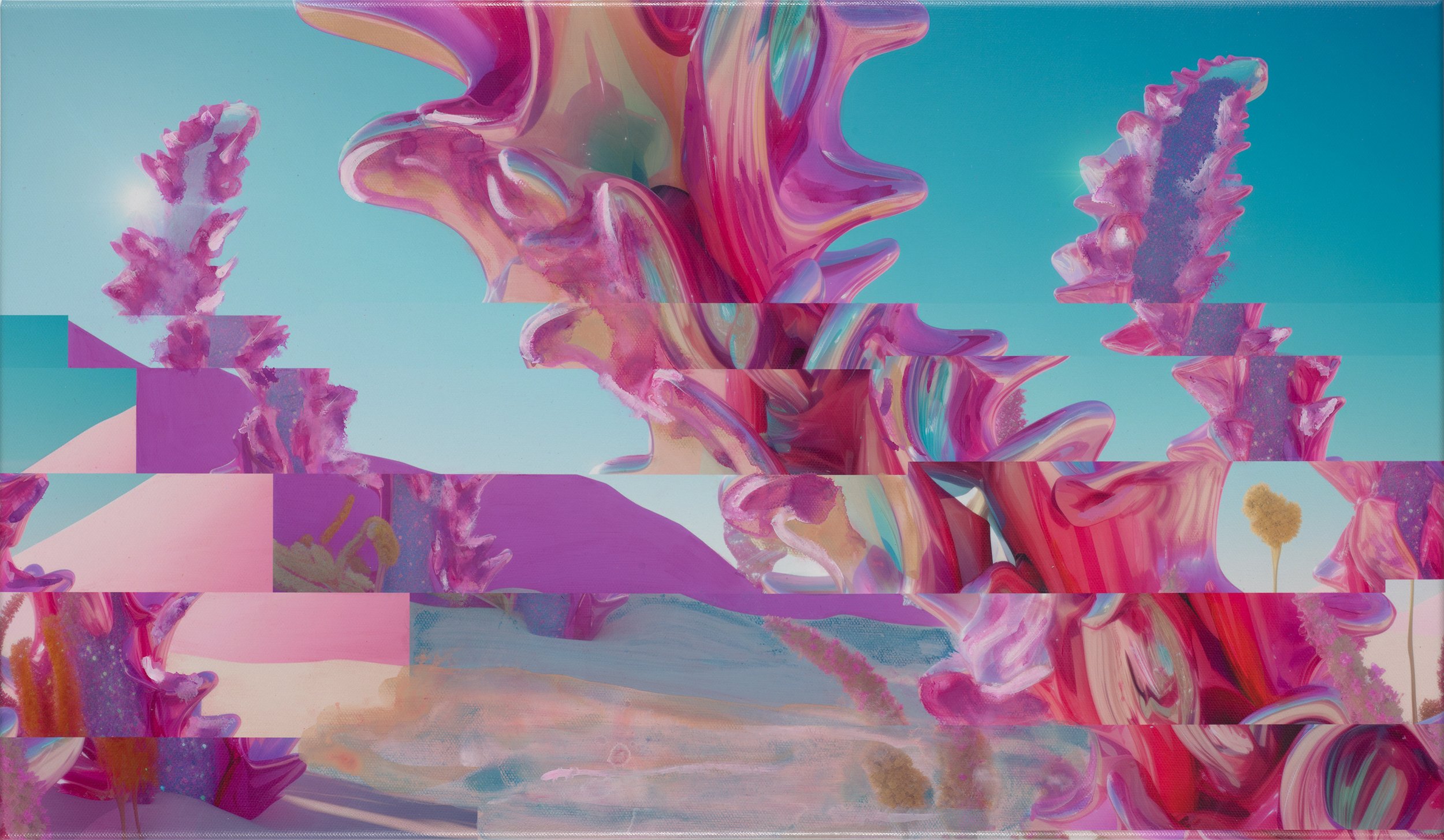
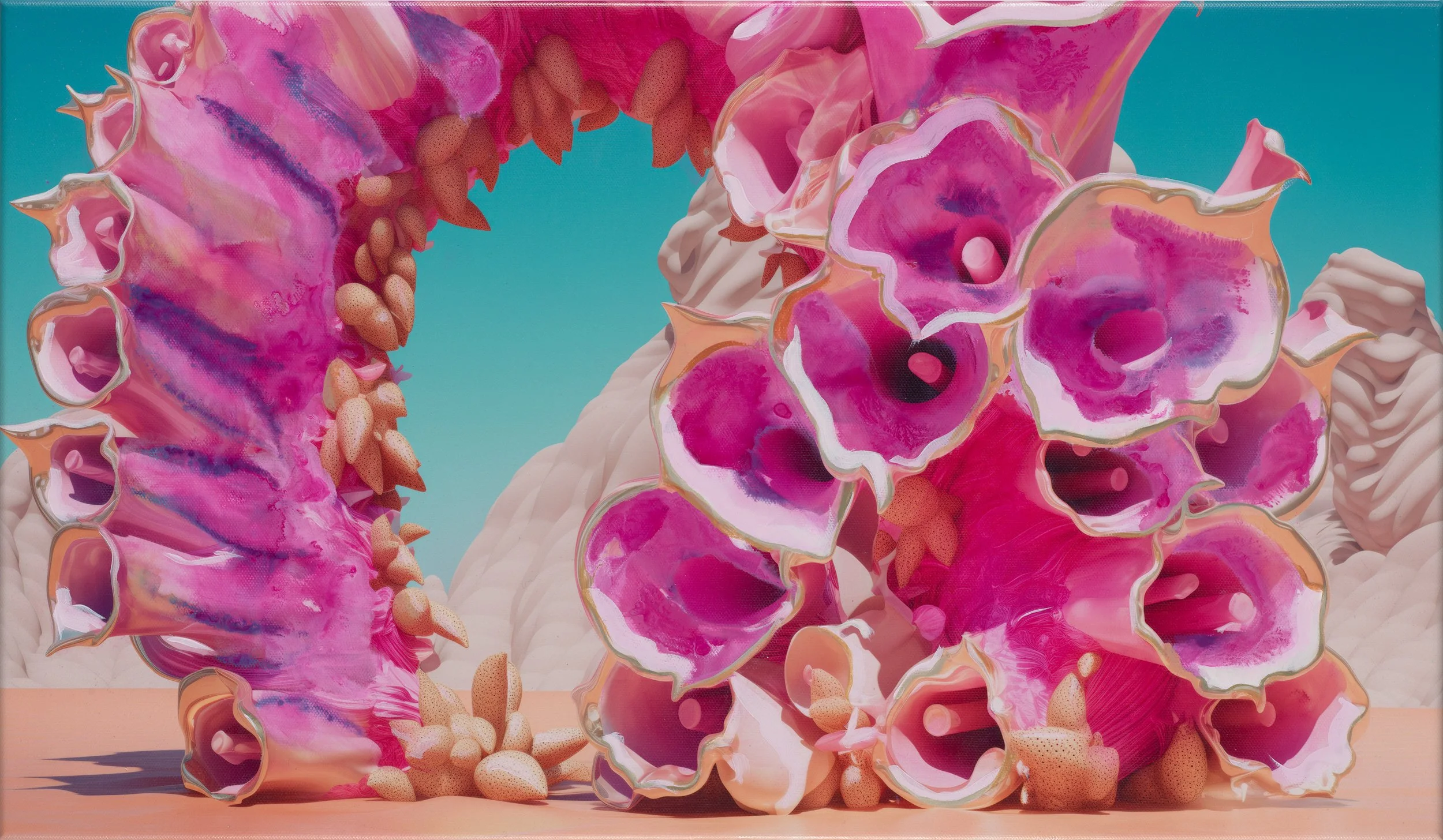
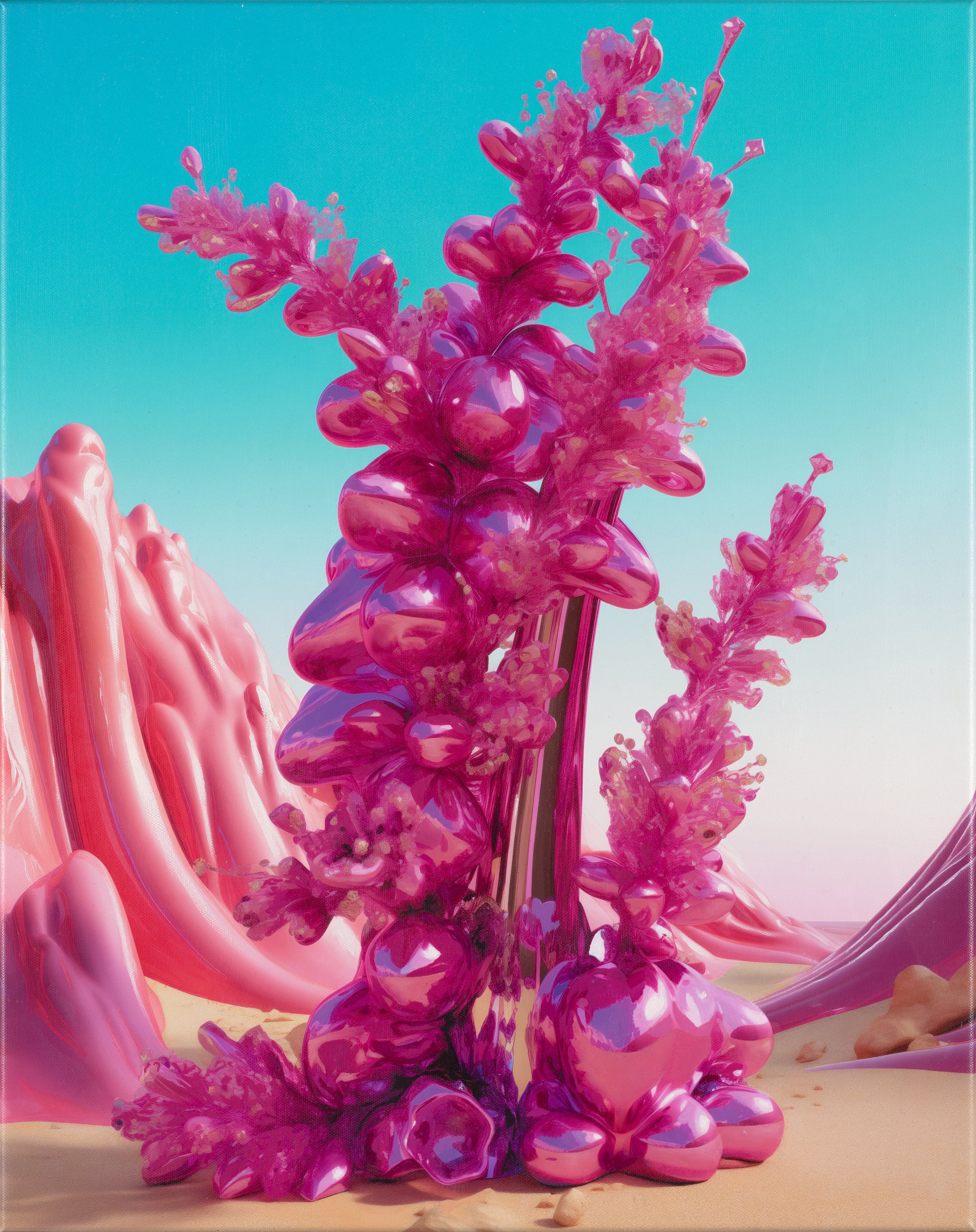
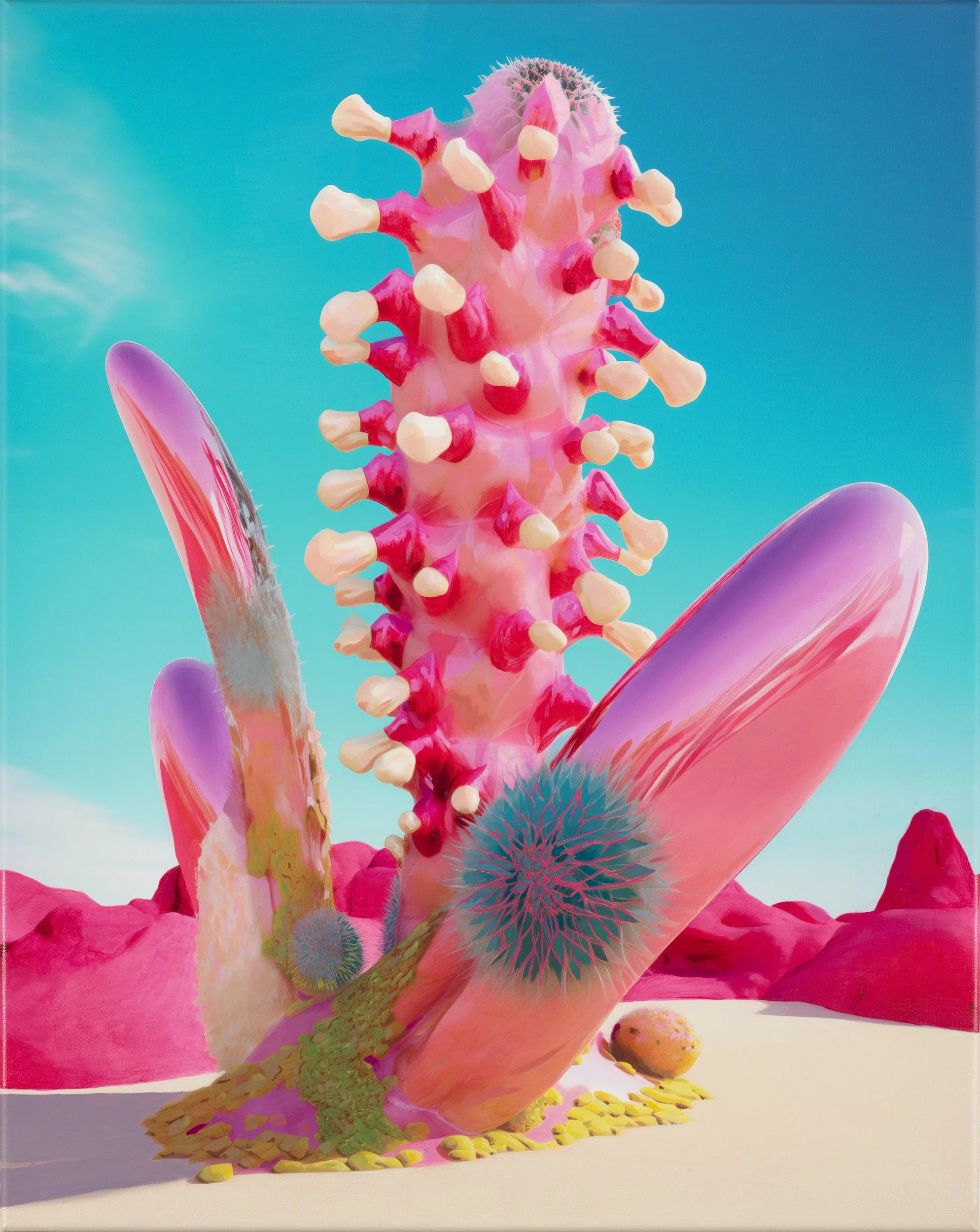
Inspired by over 15 years of trekking otherworldly deserts from Joshua Tree to Atacama, Kate Ballis presents Future Flora. These paintings celebrate surreal, autonomous plant life, reclaiming synthetic digital foundations with the warmth of the human hand and the spark of spirit.
Words by Carrie Scott
Sacred sites are often described as the earth’s energy vortices — places where geology, energy, mythology atmosphere and human imagination converge. It is from these potent landscapes that Kate Ballis’s work draws its breath.
For more than fifteen years, Ballis has pursued the surreal through the real. Working primarily with photography, she has travelled to deserts, salt lakes and volcanic terrains across the globe, using infrared and ultraviolet processes to reveal unseen frequencies of light. Her long-running photographic series, Infra Realism, reimagined the natural world in hyper-saturated colour — not as fantasy, but as a perceptual shift. The (converted full-spectrum) camera became a tool for accessing what the naked eye cannot hold.
Over time, however, the limits of photography began to press in. To build the worlds she imagined — landscapes heightened beyond documentation — Ballis moved into digital construction, directing synthetic image systems to create desert-scapes that echoed both memory and hallucination. Yet even this began to feel incomplete. The screen could suggest transcendence, but it could not embody it. Painting became the necessary next step.
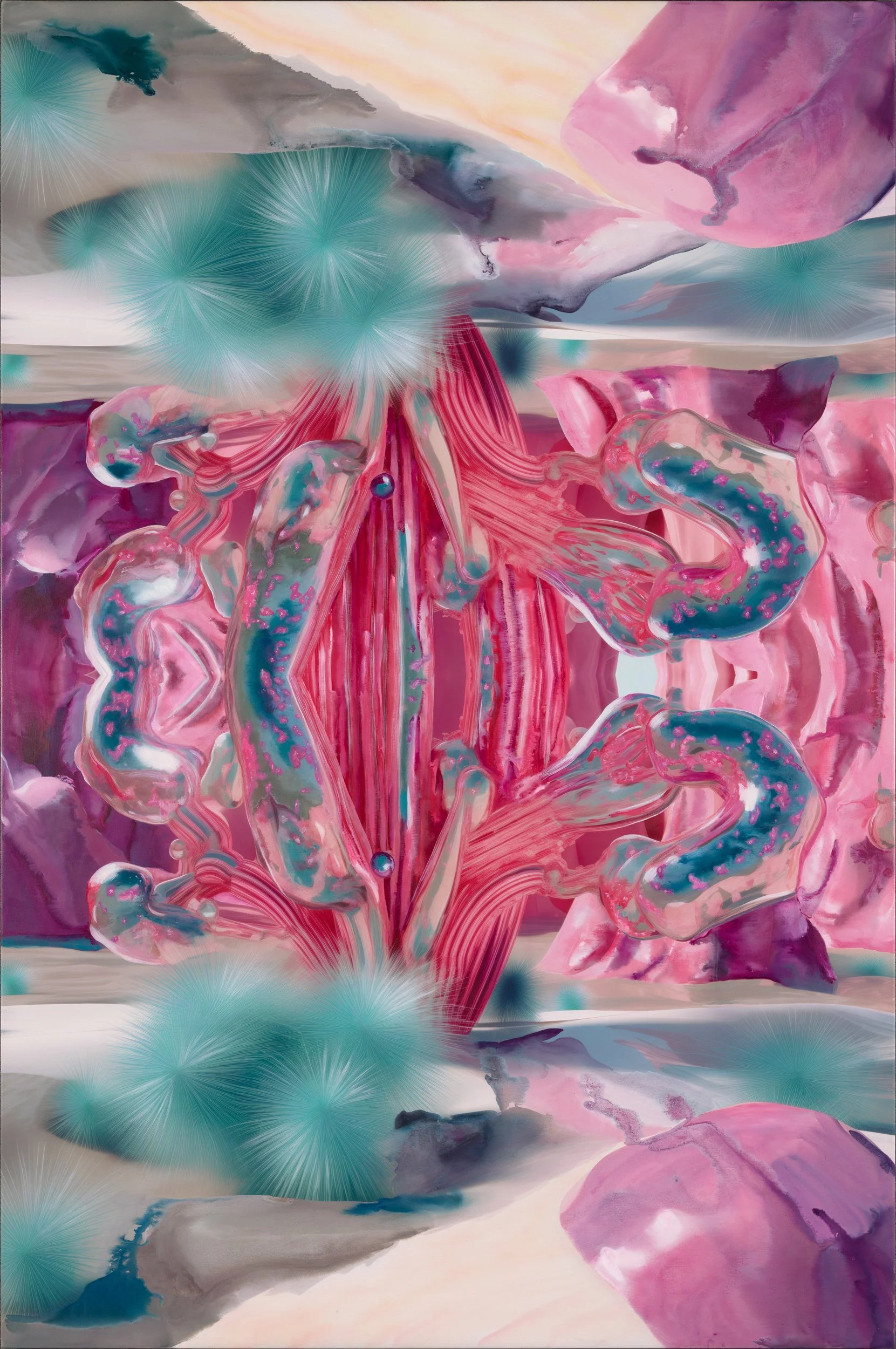
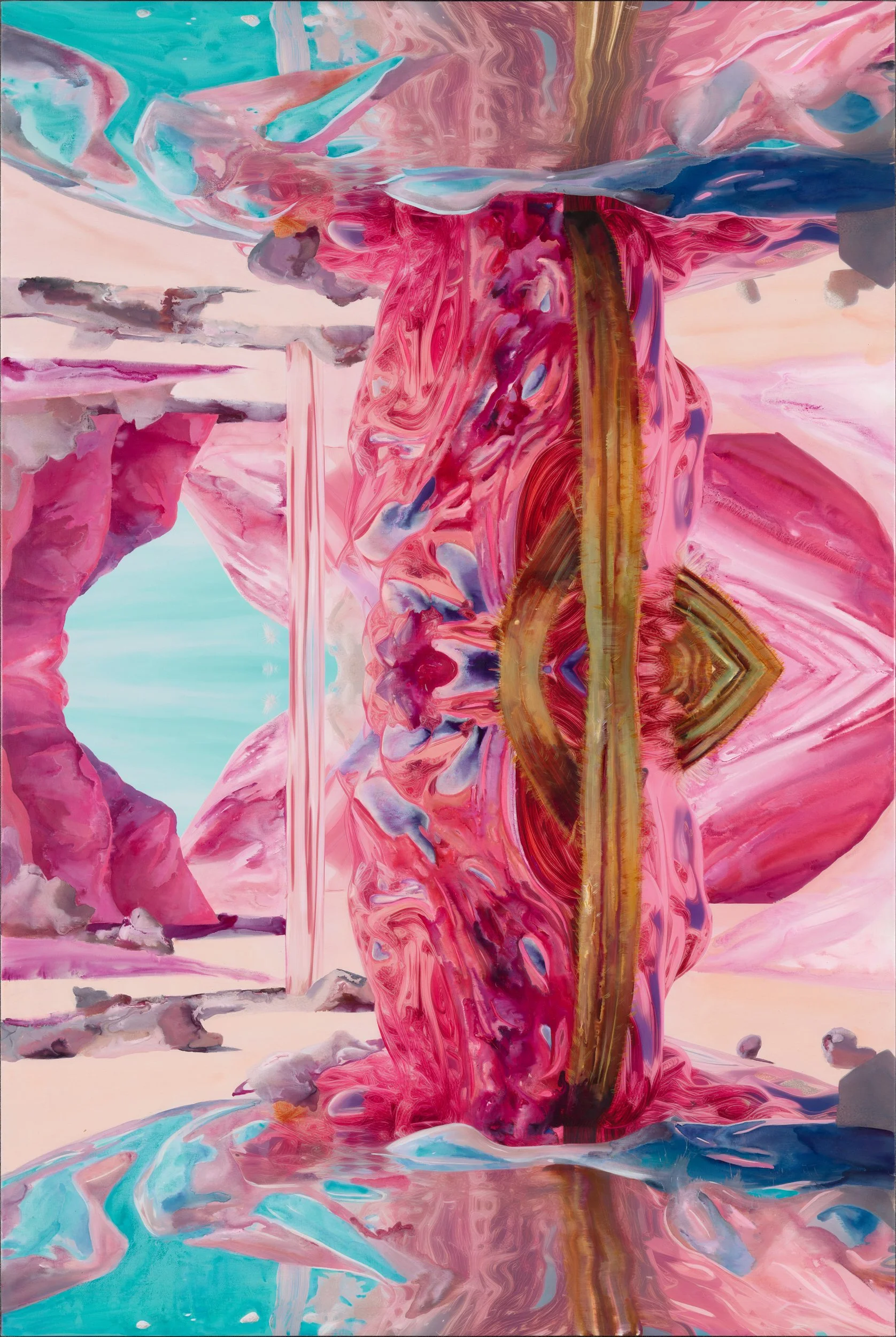
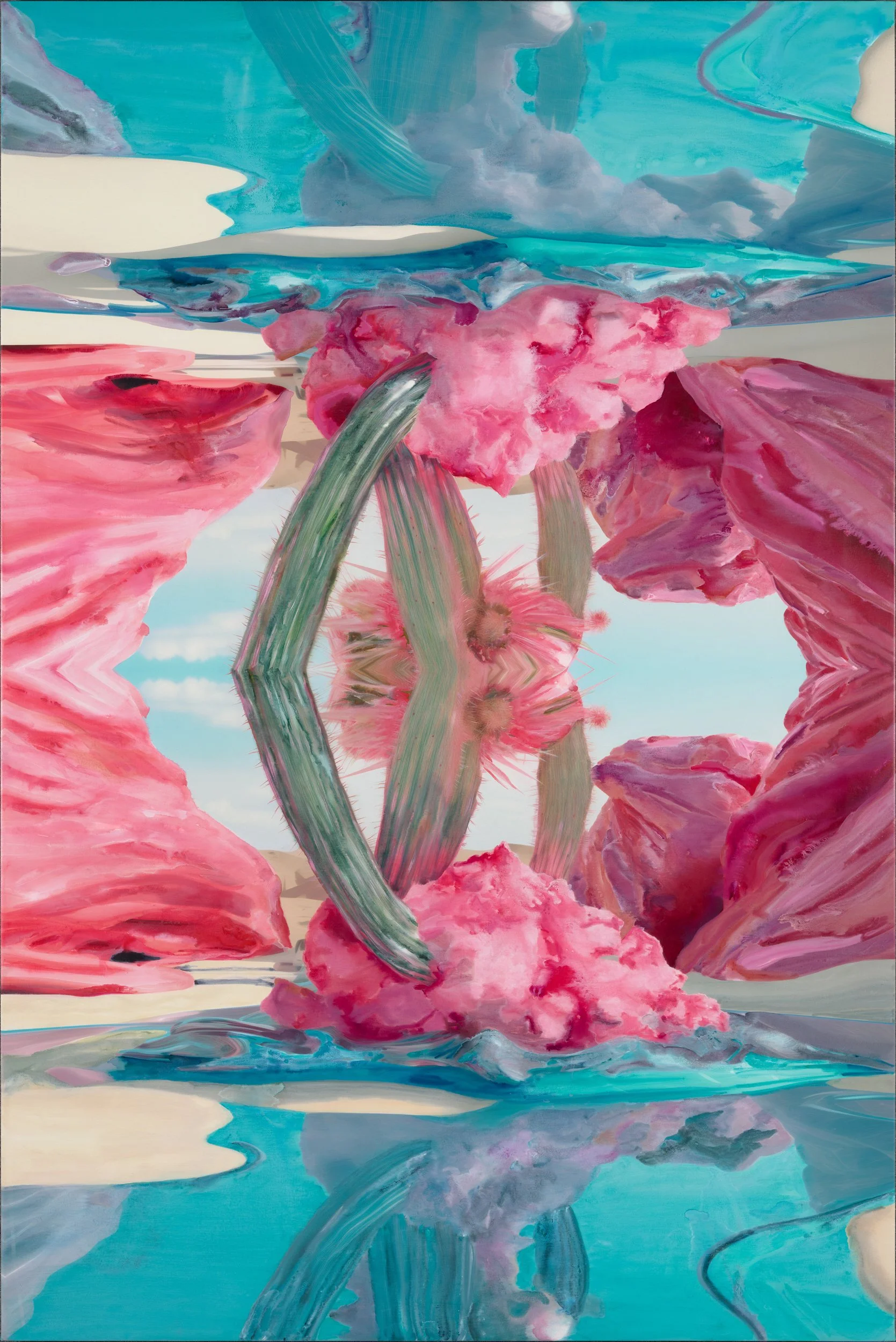
In this new body of work, Ballis begins with digitally constructed landscapes rooted in her years of fieldwork. She then disrupts and reconfigures them — mirroring, fracturing and rebuilding the compositions into kaleidoscopic architectures that recall the sacred geometry found in nature. Onto this scaffold she brings the hand: oil, watercolour, gouache, beeswax and cold wax layered directly onto the surface. The gesture re-enters and imperfection interrupts precision. The human touch pushes against the rigidity of the digital base.
The process itself is ritualistic. Ballis approaches the studio as a site of mediation between the synthetic and the elemental. Sound healing and prayer guide her into a concentrated state; singing bowls are used to vibrate pigment and mineral across the surface. Water and colour are treated not as passive materials but as collaborators, moving in response to resonance and gravity. Organic textures of wax anchor the luminous fields, grounding the ethereal within the physical.
If her earlier photographic works sought to reveal hidden spectrums of light, these paintings attempt something more embodied: they make energy tactile. The compositions pulse with symmetrical tension — part landscape, part portal — where surreal flora bloom and multiply with autonomous force. Digital hallucination is slowed, thickened and made material.
Rather than abandoning photography, Ballis extends it. The paintings carry forward her long-standing inquiry into perception, spirituality and the unseen — but now insist on presence. They ask what happens when the virtual is returned to the hand, when frequency becomes pigment, when vision acquires weight.
Ultimately, these works hold a space between worlds: synthetic and elemental, imagined and remembered, terrestrial and cosmic. In that space, colour becomes both evidence and invocation — a record of looking, and a call to transcend it.